
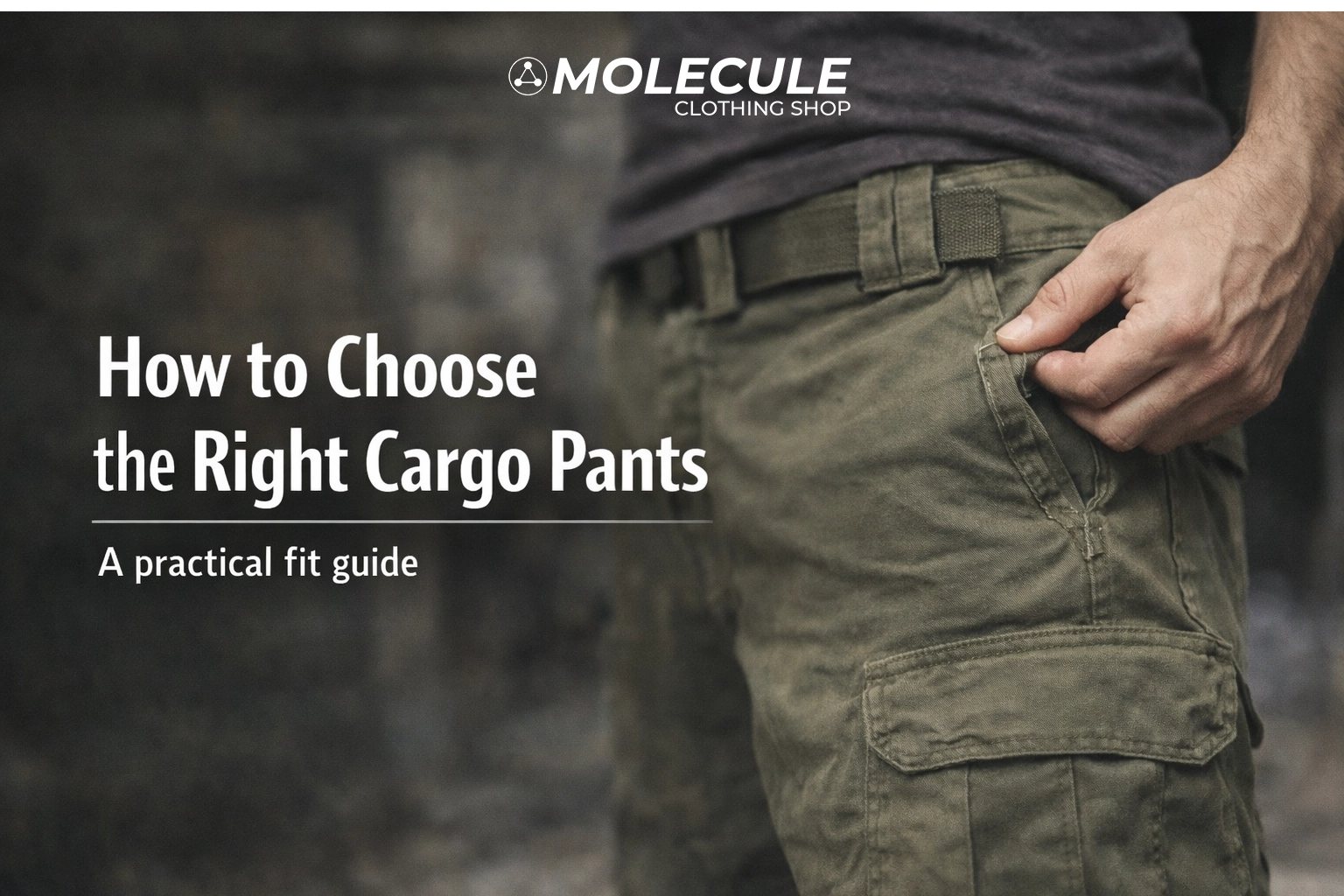
How to Choose the Right Cargo Pants – A Practical Fit Guide
Cargo pants can look effortless.
Or completely wrong.
The difference is rarely the concept. It’s the fit.
Cargo pants were never meant to be fashion experiments. They originated in functional environments – military, outdoor work, travel – where movement and storage mattered more than silhouette trends.
But over time, fashion cycles exaggerated them. Too baggy. Too skinny. Too tactical. Too decorative.
Choosing the right cargo pants today isn’t about chasing trend waves. It’s about understanding proportion, structure, and purpose.
This guide breaks it down clearly – so you buy once, and buy right.
Step 1: Start With Silhouette, Not Pockets
Most people look at the pockets first.
That’s a mistake.
Fit defines whether cargo pants look modern or dated.
There are three core silhouettes:
1. Relaxed Fit
- More room through thigh and knee
- Best for travel, outdoor use, high movement
- Works well with boots or heavier footwear
Relaxed doesn’t mean oversized. It means breathable and balanced.
2. Regular Fit
- Slight taper from thigh to ankle
- Most versatile for everyday wear
- Works with sneakers, boots, or minimalist shoes
If you’re unsure – start here.
3. Slim Utility Fit
- More tailored
- Slight taper
- Cleaner urban aesthetic
The key: slim should never restrict movement. If you feel tension when bending or walking stairs, it’s too tight.
Step 2: Fabric Weight Changes Everything
Fabric is the silent difference between quality cargo pants and disposable ones.
Pick them up.
They should feel structured.
Too light → they collapse, wrinkle, and lose shape.
Too heavy → they become stiff and uncomfortable.
The ideal fabric:
- Heavy cotton twill
- Durable weave
- Breathable but structured
- Softens over time without thinning
Good cargo pants break in like denim. They don’t fall apart.
Step 3: Pocket Placement Is About Balance
Cargo pants are defined by their side pockets – but placement determines whether they feel refined or exaggerated.
Look for:
- Pockets sitting flat against the leg
- No excessive outward bulging
- Flaps that lie cleanly
- Proportional sizing
If pockets dominate the leg visually, the design feels costume-like. If they sit naturally within the leg line, they feel intentional.
Utility should integrate – not overwhelm.
Step 4: Waist Construction & Adjustability
Modern cargo pants should feel structured at the waist.
Better designs include:
- Adjustable side straps
- Strong belt loops
- Button fly or reinforced zipper
- Solid waistband stitching
Elastic-only waistbands tend to feel casual and lose structure over time.
Structure gives longevity.
Step 5: Length & Break Matter More Than You Think
One of the most common mistakes is incorrect length.
Cargo pants should:
- Sit naturally at the waist
- Slightly break at the shoe (minimal stacking)
- Not drag or bunch excessively
Too long → sloppy.
Too short → awkward.
If needed, slight tailoring at the hem can refine the entire silhouette without altering the cargo character.
Step 6: Choose Color Strategically
Cargo pants work best in grounded tones.
The classics remain:
- Olive
- Khaki
- Sand
- Washed black
- Earth brown
These colors integrate easily into wardrobes and reflect the original purpose of the garment.
Bright colors or extreme washes tend to age faster.
Neutral tones endure.
Step 7: When to Choose Cargo Over Denim
Why pick cargo pants instead of jeans?
Because they offer:
- Better storage
- More movement
- Lighter structure in heat
- A slightly rugged edge
For travel, city walking, or outdoor environments, cargo pants feel less restrictive than denim.
They adapt.
Step 8: How to Style Cargo Pants Without Looking Tactical
The styling rule is simple:
Balance utility with minimalism.
Good combinations:
- Structured cotton tee
- Clean overshirt
- Neutral hoodie
- Simple sneakers or boots
Avoid layering multiple heavy tactical pieces together.
Let the pants carry the utility identity.
Restraint modernizes them.
Step 9: Signs of Low-Quality Cargo Pants
Before buying, check for:
- Thin, flimsy fabric
- Loose threads
- Weak pocket stitching
- Twisting seams
- Shiny synthetic blends
Quality cargo pants age well. Poor ones degrade quickly.
Authenticity shows over time – not just in photos.
Learn more about Authentic Molecule Construction →
Step 10: Fit for Body Type
Cargo pants can work on most body types when proportioned correctly.
- Athletic build → Regular or relaxed works well
- Slim build → Slim utility fit balances structure
- Larger frame → Relaxed fit prevents pulling at pockets
The goal isn’t tightness. It’s mobility and shape harmony.
Why Cargo Pants Keep Returning
Like cargo shorts, cargo pants never disappear entirely.
Because they serve real life.
They carry. They move. They endure.
As fashion shifts back toward durability and practicality in 2026, cargo pants feel less like a statement — and more like a sensible choice.
And sensible choices often outlast trend cycles.
Final Thought
Choosing the right cargo pants isn’t complicated – if you focus on fundamentals.
Silhouette.
Fabric.
Pocket balance.
Construction.
When those elements align, cargo pants stop being “fashion” and start being a reliable part of your wardrobe.
The best pair isn’t the loudest.
It’s the one you reach for without thinking.
FAQ
Are cargo pants still in style in 2026?
Yes. Utility silhouettes remain relevant as fashion shifts toward durability and function.
Should cargo pants be tight or loose?
Neither. They should feel structured but allow movement. Avoid restriction.
What fabric is best for cargo pants?
Heavy cotton twill offers durability, breathability, and long-term structure.
Can cargo pants be worn casually?
Absolutely. Pair with clean basics for a modern look.